

How To Draw The Dude Perfect Logo
Your company's logo is the foundation of your business branding. Information technology is probably the starting time interaction that yous will have with your customers. An effective logo tin can plant the right tone and prepare the proper ethos. After years of crafting logos for different projects, I've come up up with a set of questions that I always ask myself before delivering a new logo.
1. What emotions does the logo evoke?
Above all pattern guidelines, the most important criterion is whether the logo reflects the character of the company. The emotions that the logo evoke should exist advisable to the company values. For example, the Disney logo evokes a sense of happiness and optimism. The curvy, fun typeface is appropriate for a company that has been making cartoons and animated pictures for kids. Notwithstanding, a similar logo fashion on a sales platform would not be appropriate.
Designers should understand the psychology of colors and the consequence that typeface has on the blueprint of a smashing logo. For example, light-green promotes relaxation and ordinarily reflects growth, health, and the environment. Red, on the other hand, may evoke danger and passionate emotions. Similarly for typefaces, Garamond, Helvetica, and Comic Sans all arm-twist very unlike sentiments. Serif fonts similar Garamond promote the idea of respect and tradition, and are hence more suitable for an environs that demands integrity such every bit a university or a news publisher. Sans Serif fonts similar Helvetica are clean and modern, and are well suited for loftier-tech businesses. Casual script fonts similar Comic Sans are probably best left for fun companies such every bit toy companies. A good understanding of the psychology of colors, typefaces, and shapes is an important office of making a not bad logo.

two. What'due south the meaning behind the logo?
Backside every smashing logo is a story. A slap-up logo is not about slapping your business proper noun on a generic shape, which is why choosing from set-made logos is a poor thought. A logo has to take a meaningful story. A skilful designer first understands the culture of the company, the tone of the product, and the vision of the business organization, much before embarking on ideas for the logo. The finish event of a quality logo is reflective of the philosophy and values of the visitor.

3. Will the logo stand the test of time?
How will the logo look in two, x, 20 years? Designers should avoid getting sucked into flavor-of the-month trends. Trends similar ultra-thin fonts and apartment shadows are blueprint styles that will probably not stand the test of time. Simple is far meliorate than complex. A simple yet memorable logo can exist used in 20 years without looking dated.
A practiced way to exam the logo is to let it sit with you for a while earlier releasing it. Some logos grow with you–the more you look at it, the more you like it. Some logos start to feel nauseating after a while–the more than you look at information technology, the more you hate it. If after a couple of weeks with the logo you find it tiresome, the logo is probably non strong or timeless enough.
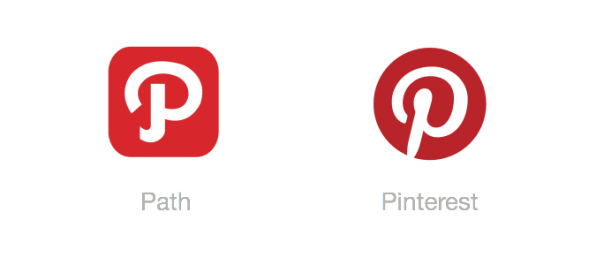
iv. Is it unique? Tin information technology be instantly recognizable?
A great logo is distinctive, memorable, and recognizable. Fifty-fifty if y'all have only seen it one time, yous should still be able to remember what it looks similar after a menstruation of fourth dimension. A good mode to test this is to prove your logo to a friend, so cover it upwards and take your friend describe the logo in a week. A fresh pair of eyes can exist very effective in figuring out the most memorable components of a logo.
In addition, if the logo reminds you lot of others you lot have seen, it is not distinct enough.
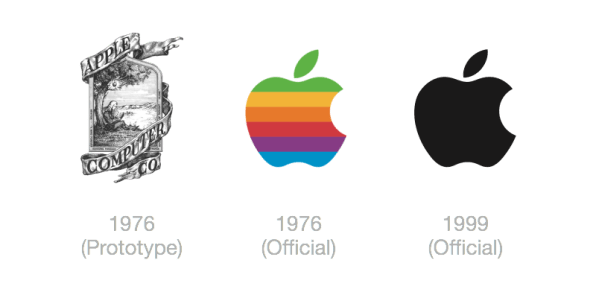
5. How does it expect in black and white?
When I brainstorm designing a logo, I ever starting time in black and white. Designing with this limitation first forces you to make sure that the logo is recognizable purely by its shape and outline, and not past its color. A stiff logo is one that is still memorable just by its contours.
A one-color logo too provides the do good of using your brand hands in multiple mediums with different backgrounds and textures.

half-dozen. Is information technology articulate and distinct in small dimensions?
Another manner to make sure logos are simple and recognizable is to scale it down dramatically. Even at tiny resolutions, a strong logo should notwithstanding be recognizable at a glance. This is also a good test to make sure that the logo is not complicated with unnecessary design flourishes. Here, you see that the Nike, McDonalds, Twitter, and WWF logos are withal very distinct at small sizes. The GE and Starbucks logos are far more than cluttered, and less recognizable when they are small.

These are not hard-and-fast rules, just guidelines for making an effective logo. It is still possible to make a strong, complicated logo, but empathize the trade-offs.
This article was edited and republished with permission from the writer. Read the original hither.

Source: https://www.fastcompany.com/3031328/the-makings-of-a-great-logo
Posted by: mullengazincomed79.blogspot.com
0 Response to "How To Draw The Dude Perfect Logo"
Post a Comment